


 |
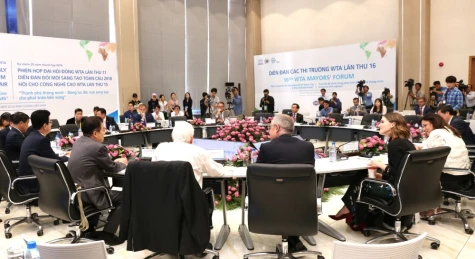
Early August 12, Department of Natural Resources and Environment held a training course on Clean Development Mechanism (CDM) project regulations. To have further information about CDM’s impact on living and human environment, we, Binh Duong Newspaper reporters, interviewed Nguyen Khac Hieu, Deputy Director of Hydrometeorology and Climate Change Department under Ministry of Natural Resources and Environment (MONRE) on this matter.
Reporter: What is CDM? And why should we apply CDM?
Mr. Nguyen Khac Hieu: Clean Development Mechanism or CDM facilitates cooperation of developing nations to developed nations under Kyoto Treaty under UNFCCC legally effective since 2005. Application of CDM targets to reduce greenhouse gas emission and protect earth’s climate system from human impacts. Implementing CDM projects, the developing nations will be offered new foreign investments and high technologies friendly to the environment, contributing to sustainable socio-economic development while protecting the environment and climate system.
Reporter: What is the implementation status of CDM and what conditions are required for Vietnam?
Mr. Nguyen Khac Hieu: CDM is internationally regulated cooperation, simply on 3 conditions: both nations (one developing and one developed) should be implementing the same project as approved by Kyoto Treaty, it should be proved that the project is for sustainable development of a developing nation, and voluntary participation.
Up to date, 254 CDM projects in Vietnam have been internationally approved with certificates per over 120 tons of CO2. Holding the number, Vietnam is ranked 4th globally regarding the quantity of approved CDM projects and 13th globally regarding CO2 certificates.
Reporter: Sir, what are the obstacles of CDM projects in Vietnam?
Mr. Nguyen Khac Hieu: Apparently, we have no national strategies in which CDM programs are considered as the action plans for clean and sustainable development. What happening in Vietnam is that the State designates to localities or separate projects. Currently, some local authorities have signed deals or contracts with foreign or joint venture companies regarding CDM projects; however, in some places, we are incompetent or lacking of trust for implementation; thus, they are omitted. As I proposed CDM to some local leaders, they were for the good and practical effects of CDM; however, most of them failed to choose the starting point. They were afraid of costly importation and disbelieved the fact that wastes could be treated at their sources.
Reporter: For the time to come, what will be done by Vietnam to develop CDM, sir?
Mr. Nguyen Khac Hieu: As we have already known that Vietnam is considered as a nation of potentials in greenhouse gas reduction by our encouraging measures to attract more foreign and domestic investors to the reduction of greenhouse gas emission and climate change adaption. This is determined by strategies of Vietnam and national programs of climate change strategies. Only by doing so can we gather all the system to implement the requirements of greenhouse gas emission reduction and climate change adaption.
Reporter: What are your evaluations of CDM projects in Binh Duong Province?
Mr. Nguyen Khac Hieu: We have been at various training courses to improve environment protection awareness in Binh Duong Province. I realized that Binh Duong Province treasured its robust efforts in improve awareness of climate change, evidently by the participation of hundreds of cadres and officials.
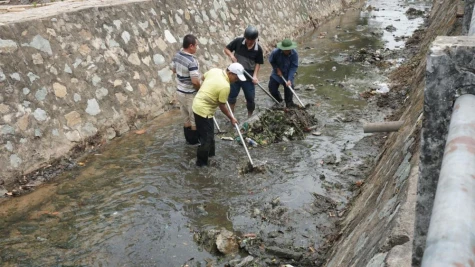
Of 254 CDM projects nationwide, Binh Duong Province has 3 projects. We can see that Binh Duong Province is potential in terms of greenhouse gas reduction projects, proving by the uses of CH4 in farms for onsite power generation and replace fossil fuels. Besides, to exploit the potentials of recyclable energy, Binh Duong Provincial authority should consider promoting solar energy in heating, garden houses, and power saving lighting.
Reported by Thien Ly – Translated by Vi Bao