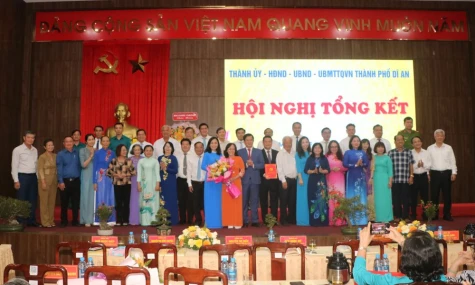


Binh Duong provincial Party Committee has recognized the execution of Directive 05-CT/TW as a pivotal political endeavor across the entire political framework, intertwined with Party development, socio-economic advancement, and national defense and security. On the occasion of the province's review of a decade of implementing Directive 05-CT/TW, dated May 15, 2016, from the Politburo (12th tenure), which focuses on "Promoting the study and adherence to Ho Chi Minh's ideology, morality, and lifestyle," a reporter from Binh Duong Newspaper conducted an interview with Mr. Bui Thanh Nhan, a member of the Standing Committee and Head of the provincial Party Committee's Propaganda and Mass Mobilization Department, to assess the outcomes, exemplary models, and lessons learned during the implementation of Directive 05 in the region.
Synchronous, innovative, and consistent execution
- Over the past decade, how has the Propaganda and Mass Mobilization Department of the provincial Party Committee executed the propaganda initiatives of Directive No. 05-CT/TW to ensure that the study and adherence to Ho Chi Minh's ideology, morality, and lifestyle have permeated the entire political system and all segments of society, sir?
Immediately following the issuance of Directive No. 05, the Standing Committee of the Provincial Party Committee provided decisive instructions and ensured synchronized implementation from the provincial level down to grassroots organizations. The Propaganda and Mass Mobilization Department of the Provincial Party Committee proactively devised plans and organized extensive outreach through various mediums, including newspapers, television, social networks, press conferences, seminars, and thematic activities within Party cells. Party committees, authorities, the Fatherland Front, and organizations at all levels effectively led and directed the dissemination of study materials and propaganda related to both full-term and annual topics. All cadres, party members, civil servants, public employees, union members, and association members participated in studying, drafting reports, developing personal plans, and signing commitments to implement these in conjunction with political and professional tasks, as well as the resolutions, directives, and regulations established at all levels. Every locality and unit incorporated the execution of Directive 05 into their programs and plans for political task implementation, emulation, reward initiatives, and the annual inspection and supervision conducted by Party committees.
.jpg)
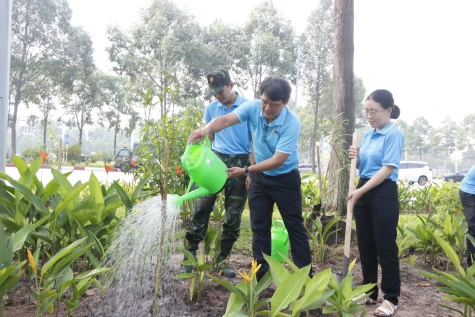
The implementation of Directive 05 is effectively aligned with Resolution 4 of the Central Committee (term 12) and Conclusion No. 21 (term 13), significantly aiding the efforts to combat ideological, moral, and lifestyle degradation, as well as the phenomena of "self-evolution" and "self-transformation." Numerous Party organizations and members have been commended for their exemplary spirit and commitment to public ethics. Additionally, the Provincial Party Committee's Propaganda and Mass Mobilization Department places a strong emphasis on promoting innovative models, exemplary figures, and commendable actions, as these serve as a vivid representation of the spirit of learning from and emulating Uncle Ho in everyday life. This approach fosters a robust dissemination within the community, contributing to the cultivation of a dynamic, responsible, and compassionate image of the Binh Duong populace. Consequently, the practice of learning from and following Uncle Ho has evolved into a regular and profound political endeavor across the entire Party, government, and among citizens from all sectors. Cadres and Party members have demonstrated a notable shift in their understanding of self-cultivation, ethical training, and lifestyle enhancement, as well as an increased sense of responsibility and commitment to serving the public. As a result, Directive 05 has been translated into tangible actions, closely intertwined with the daily responsibilities of cadres and Party members, thereby actively fostering trust and consensus among the populace.
Comprehensive outcomes, facilitating distinct transformation
- Could you please share the remarkable outcomes achieved after a decade of implementing Directive 05 of the Politburo on "Promoting the study and adherence to Ho Chi Minh's ideology, morality, and lifestyle" in the province?
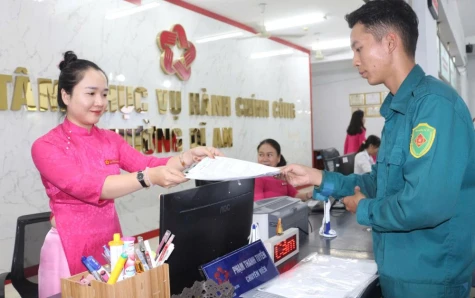
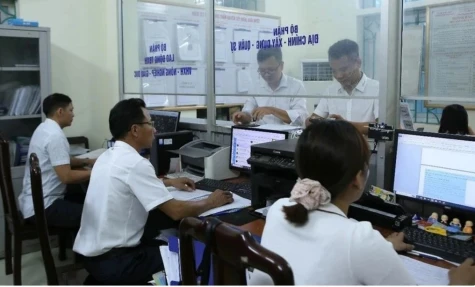
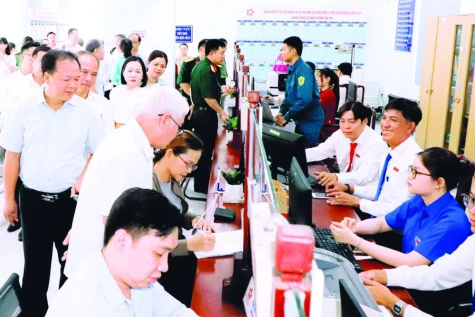
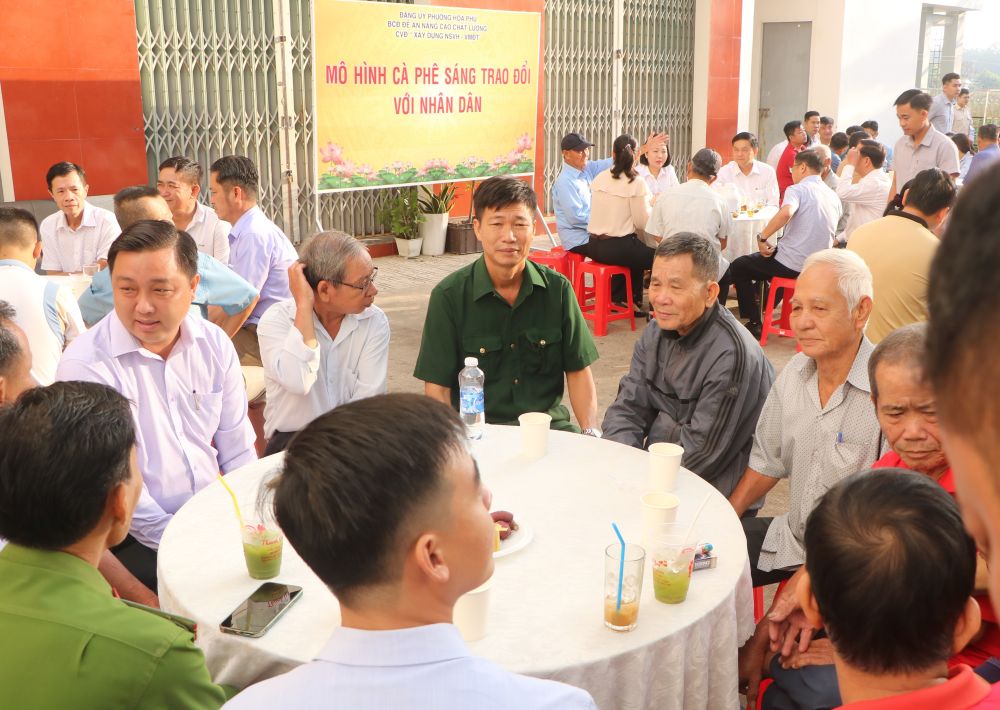
- The most significant outcome is the transformation in awareness and action among cadres and party members. Engaging with and emulating Uncle Ho has become a habitual practice, integrated into the annual evaluation criteria. Party committees at all levels have aligned the content of Directive 05 with the execution of political tasks, party development initiatives, administrative reforms, and enhancements in service quality for the populace. Consequently, studying Uncle Ho has evolved from a theoretical exercise into a tangible, practical endeavor for each cadre, party member, and individual. Notably, numerous agencies and units have initiated movements such as "Friendly Government Serving the People," "Office Smile," and "One-Stop Shop," all aimed at elevating the satisfaction of citizens and businesses. Cadres, civil servants, and public employees have adopted an approach that emphasizes proximity to the people, respect for their needs, and a commitment to addressing urgent issues arising from the grassroots level. Particularly, there have emerged numerous exemplary models and innovative, practical methodologies, including initiatives that foster closeness to the community, as seen in the Party Committees of Ben Cat, Bau Bang, Di An, Dau Tieng, and Bac Tan Uyen; the concept of a government that is friendly, by the people, and for the people; and welcoming offices dedicated to serving the public. Initiatives such as morning coffee dialogues with citizens at the Party Committees of Thu Dau Mot City, Thuan An, Di An, and the Provincial Party Agencies, as well as the Provincial People's Committee of Tan Uyen City, which features the "Golden Hearts" model, have been widely implemented and yielded significant results. Thus, the spirit of learning from Uncle Ho has been materialized through practical work, tasks, and projects across various agencies, units, and localities. Additionally, many effective models and practices have been broadly replicated. Regular inspections, supervision, and both interim and final evaluations of directives have been conducted, enhancing the effectiveness of their implementation. Concurrently, as previously mentioned, hundreds of exemplary individuals and groups have been recognized and rewarded, fostering a robust momentum throughout the province.
It can be asserted that the outcomes of implementing Directive 05 in Binh Duong have significantly contributed to the successful execution of the Resolution of the 11th Provincial Party Congress for the 2020-2025 term. This includes numerous objectives related to socio-economic development, national defense and security, and Party building, all of which have been met or surpassed, while continually enhancing both the material and spiritual well-being of the populace.
Replicating models and disseminating best practices
- After a decade of executing Directive 05 of the Politburo, what insights have been gained to assist the province in transitioning from "studying" to "emulating" Uncle Ho in the most effective manner?
After a decade of executing Directive 05 from the Politburo, the province has garnered numerous significant insights, particularly in transitioning from "studying" to "following" Uncle Ho. Five essential elements have been identified as critical factors for practical effectiveness:
Firstly, the robust and consistent leadership and guidance of Party committees and authorities at all levels are essential. The study and adherence to Uncle Ho's principles can only be profound when there is unwavering direction from the provincial level down to the grassroots. Party committees at all levels recognize this as a crucial political task, intricately connected to Party development efforts and the achievement of local socio-economic development objectives.
Secondly, the connection between studying and emulating Uncle Ho with specific political tasks and movements is essential. "Following" transcends mere slogans; it integrates into daily operations, administrative reforms, and the accountability of cadres and civil servants, particularly in their service to the public. Initiatives such as "Close to the people" and "Listen to the people, communicate in a way that fosters understanding, and act to build trust" are being effectively implemented and widely disseminated.
Third, promote the exemplary roles of cadres and party members, particularly leaders. The exemplary spirit of the leadership team serves as a catalyst that permeates the political system. The motto "practice goes hand in hand with words" and "lead by example" is consistently upheld, thereby enhancing prestige, responsibility, and work efficiency.
Fourth, innovate the content and format of propaganda and education. Learning transcends mere theory and is effectively communicated through narratives about Uncle Ho, exemplary figures, and inventive practices. Numerous exemplary models, such as "Uncle Ho's Cultural Space" in Di An City and "Morning Coffee for People's Dialogue" in Thu Dau Mot City, are sustained and disseminated. Concurrently, the province leverages social networks and modern media to propagate the ideological values, ethics, and style of Ho Chi Minh to a broad audience of officials, party members, and the general public.
Fifth, emphasize timely inspections, supervision, and both interim and final reviews. Periodic evaluations facilitate the identification of effective methods for replication while navigating formalities and challenges. Exemplary models and best practices are recognized promptly, fostering motivation and sustainability in the implementation of Directive 05. These insights serve as a crucial foundation for the Party Committee, government, and citizens of Binh Duong to further advance the principles of learning from Uncle Ho, thereby contributing to the development of a more sustainable, civilized, and modern locality.
- Thank you, sir!
Interviewed by Do Trong – Translated by Vi Bao