


After recovering from illness, patients may have mental disorders due to COVID-19 including anxiety and depression disorder. In the treatment of mild and moderate post-COVID-19 mental disorders, the psychotherapy recommended by medical professionals as the basic intervention can combine diaphragmatic breathing exercises and meditation. .
Post-COVID-19 anxiety and depression
Medicine Doctor Huynh Minh Chinh, Deputy Director of Department of Health, said that after contracting COVID-19, some patients suffered from anxiety disorders and depression. Patients with anxiety disorders often have symptoms of insomnia, fatigue, excessive anxiety, restlessness, difficulty falling asleep, loss of appetite, difficulty paying attention and poor memory, palpitations, full stomach, frequent urination, hot flushes or chills. Patients with depression often complain of difficulty falling asleep, difficulty staying asleep, waking up very early, light sleep, and sleep full of dreams. In the morning, the patient feels very tired, anorexia, eats less, so he/she may lose a lot of weight. Besides, the patient is often sad, easy to cry, irritable for no reason with complaints of difficulty paying attention, easily forgetting and being very anxious about the disease; many patients are more sluggish. In severe cases, the patient needs to be examined and treated by a psychiatrist, in mild cases, the patient can use make use of psychotherapy.
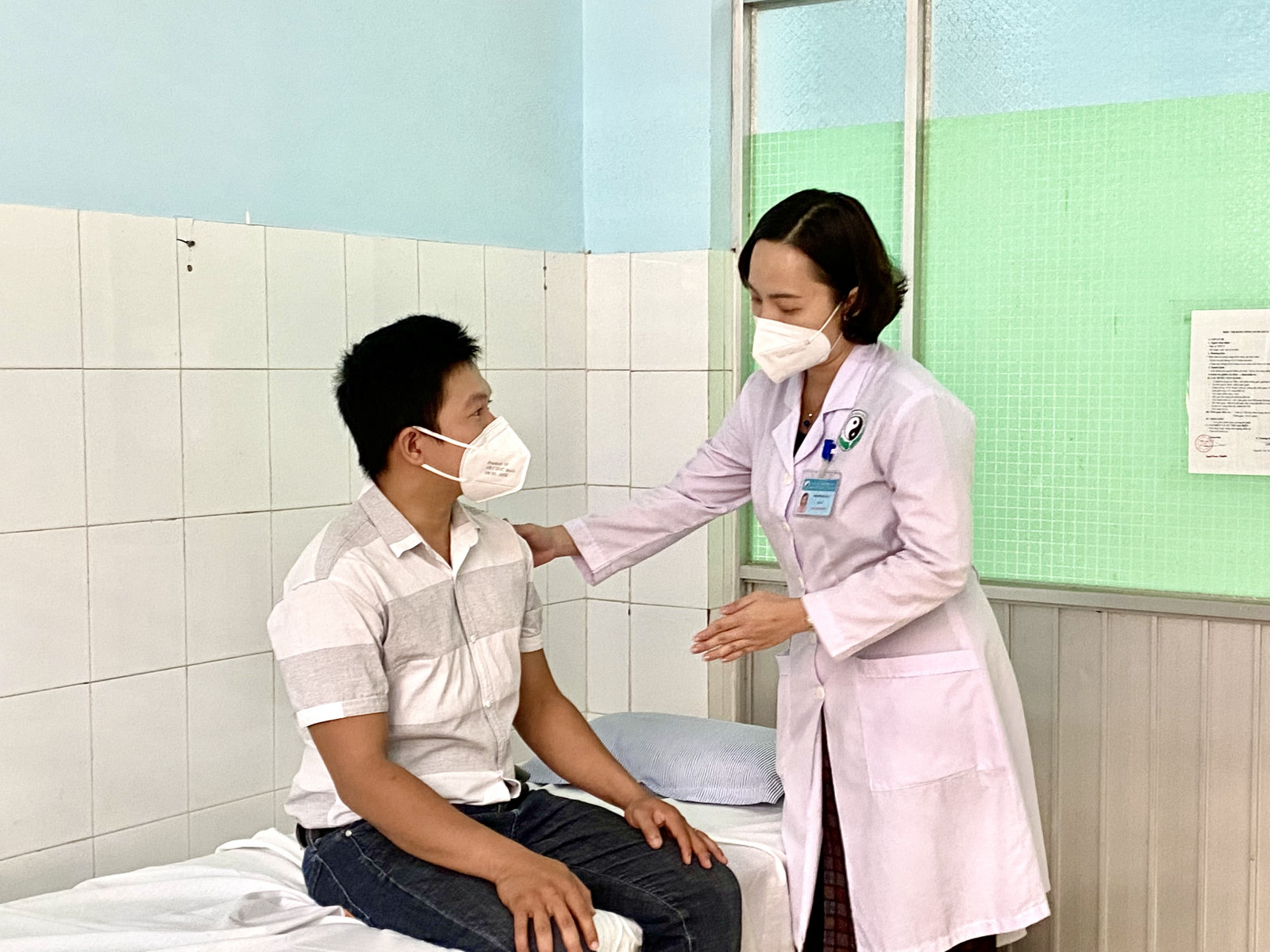
A doctor of Binh Duong provincial Rehabilitation Hospital instructs breathing exercises for a COVID-19 patient
Medicine Doctor Quach Trung Nguyen, Director of Binh Duong provincial Rehabilitation Hospital, said that psychotherapy that can be effective in treating post-COVID-19 anxiety disorder as a cognitive and behavioral therapy. These measures can reduce anxiety about the so-called disaster relief anxiety. Other measures to control anxiety behaviors such as relaxation exercises and breathing exercises, etc. in combination with cognitive and behavioral therapy for higher treatment effectiveness. Cognitive behavioral approaches address the patient's distorted perception and behavioral approaches to somatic symptom resolution. The main techniques used in the approach are relaxation and biofeedback. Biofeedback therapy is a type of alternative and complementary medicine technique that aims to control the body's function by using the mind.
Some preliminary data suggest that a combination of cognitive and behavioral approaches is more effective than using just one technique. Psychotherapy focuses on identifying ego weaknesses and strengths, thereby developing effective coping strategies for anxiety. Most patients experience marked remission of their anxiety symptoms when given the opportunity to discuss their problems with their doctors. If doctors detect an external situation that causes anxiety in a patient, they can change the environment and thus relieve the stress. Reducing symptoms enables patients to function effectively in their daily work and relationships, thereby, achieving satisfaction with life.
Practice anxiety-reducing breathing - a combination of diaphragmatic breathing and meditation
Associate Professor Doctor Nguyen Lan Hieu, Director of Hanoi Medical University Hospital, Director of the provincial General Hospital affirmed that psychotherapy is a basic, indispensable and considered intervention throughout the treatment process for COVID-19 patients whovmay face serious psychological disorders that affect their rehabilitation outcomes in particular and treatment outcomes in general. We refer to the open approach as an anxiety-reducing breathing exercise that combines diaphragmatic breathing and meditation.
Talking about the effect of the therapy, Associate Professor Doctor Nguyen Lan Hieu, added that the method increases stability, diaphragm strength while reducing the work of breathing and reducing the need for oxygen by slowing the breathing rate along with stimulating the vagus nerve to reduce the production of pro-inflammatory cytokines (the substance that plays a role in creating a cytokine storm in the pathogenesis of COVID-19). In addition, this method also helps the patient to keep peace while having thoughts, emotions, worries, pain, and sadness. The method is indicated for patients with shortness of breath, rapid breathing, feeling short of breath and having worries and painful thoughts about unwanted things happening in life.
An anxiety-reducing breathing exercise is introduced in 3 steps. Step 1, the person in a comfortable sitting or lying position; step 2 diaphragmatic breathing; step 3 is to pay attention to the breath and the rising and falling of the abdomen. Associate Professor Doctor Nguyen Lan Hieu noted that while breathing, there may be negative interfering thoughts and emotions; in that case we should not chase or suppress them, but return to focus on the breath to let the ‘pain’ go and the difficulty breathing, painful feelings pass. The key of the exercise is to find yourself breathing in and out smoothly, then the shortness of breath as well as painful thoughts and emotions would pass; peace and happiness are just right in the moment of breathing practice.
Patients can recite the verse of Master Thich Nhat Hanh "Breathing in, the mind calms / Exhaling, the mouth smiles / Breathe in, stay in the present / Exhale a wonderful moment". Or the patient can write 3 more things of gratitude every day to appreciate what they have in the present moment and write what they want to do after the illness is over to have more positive motivation to overcome the difficult time. Practice time 3-4 times a day, at least 10 minutes each time so that when there is difficulty breathing, anxiety, and suffering, you only need to remember and do it right away.
Reported by Kim Ha – Translated by Vi Bao