


More than 10 years ago, housing in Binh Duong province grew strongly and diversely with many types such as townhouses, villas, social houses, lodging houses for workers, mid- and high-rise apartments... At the same time, new urban areas began to be formed and quickly became a growth motivation, creating an elegant and modern urban face.
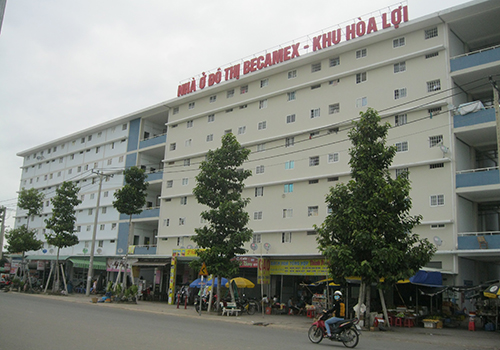
Binh Duong has implemented many solutions to develop housing, meeting the needs of people. In photo: Residential area of Becamex town in Hoa Loi Ward, Ben Cat Town.
To stimulate socio-economic growth
For over 20 years, Binh Duong gained impressive economic development accomplishments associated with the process of industrialization and urbanization. This was accompanied by the changing urban appearance in the province, with the objective to become a developed, competitive and worth-living city. Urban development associated with industrialization and modernization, is the motivation to attract residents, strengthen human resources, increase housing demand. More than 10 years ago, housing in Binh Duong province grew strongly and diversely with many types such as townhouses, villas, social houses, lodging houses for workers, mid- and high-rise apartments... Meanwhile, new urban areas began to be formed and quickly became a growth motivation, creating an elegant and modern urban face.
Provincial housing development program basically fulfilled a set number of targets. The development of housing with various types, such as commercial houses, social houses, worker's lodging houses, has gradually met housing demands in the province. In 2015, provincial housing area reached 46.45 million m2 of floor (of which housing area in urban areas was about 37,452 million m2 of floor, rural areas reached 8,997 million m2). Up to Dec 2019, total floor area of housing construction in the province reached about 70.78 million m2 of floor, with 831,505 houses.
Vo Hoang Ngan, Director of Provincial Department of Construction, said housing development played an important role in the socio-economic growth, thereby creating jobs for workers, contributing to effectively implement socio-economic development policies of each locality. Therefore, Provincial Party Committee, People's Council and Provincial People's Committee put forward the per capita housing development target in provincial socio-economic development target system over each 5-year term. In addition, housing development has been oriented in the Binh Duong Master Plan for Socio-Economic Development until 2020, the supplementing plan until 2025; General planning on construction of Binh Duong urban areas till 2020 and vision towards 2030.
Housing demand is on the rise
Over the period from 2009 to 2019, Binh Duong had an average population growth rate of about 5% / year. According to the 2019 population census in Binh Duong, as of 1 Apr 2019, the average population of the province is about 2,456 million, population density of 901 people / km2. With the current population growth rate, it is estimated that by 2020, provincial average population would be about 2.55 million and by 2030, about 3.5 million.
Mr. Ngan said that the proportion of urban population in the province tended to increase in 2020 and 2030, when many localities would be upgraded to cities, towns and wards. In terms of household size, in 2019, the average demographic in Binh Duong was 3.2 persons / household. It is predicted that this indicator would decrease slightly, to 3.1 persons / household in 2025 and 3 persons / household in 2030. The reduction in household size would lead to an increase in the demand for new houses in the future”.
Apart from rapid population growth, in recent years the urbanization rate in Binh Duong has grown at a relatively fast pace. In 2014, the urbanization rate was 76.8%. In the past 4 years, the urbanization rate was stable, approximately 77% to 78%. The urbanization rate of Binh Duong in 2019 was 80.17%. It is expected that it would reach 82% in 2020 and over 85% in 2030.
Strive to meet the floor area targets
Mr. Ngan, Director of Department of Construction, said that the population growth plus the continuous increase in population density put a great pressure on local authorities in maintaining living standards as well as ensuring housing area for people. Due to the reality, the adjustment of development rate of housing types in the Housing Development Plan 2016-2020, especially Housing Development Plan 2020, is necessary in order to meet provincial average housing area target in 2020, better meet housing needs of all people strata. Therefore, Provincial People's Committee approved a proposal to adjust some contents of the Plan in accordance with Decision No. 3295 / QD-UBND dated 30 Nov 2016.
In period 2016-2020, the average housing area of the whole province will reach 30.0m2 / person (minimum housing area 8.2m2 / person), of which urban areas will be 31.5m2 / person, rural areas 24,5m2 / person; to increase the percentage of solid houses in the whole province by over 50%; the rate of temporary houses will be reduced to under 0.7%. The province will continue to implement social housing development works to serve the demand for low-income housing in urban areas, worker's lodging houses, student houses, other social houses, and resettlement houses in urban areas.
Binh Duong needs to invest in building new about 2 million m2 of floor area. In addition, Binh Duong will develop official residences, houses for people with meritorious services under the approved scheme; allocate capital to complete technical infrastructure of resettlement housing areas for people. Besides, the province will continue to develop commercial housing; manage 20% of residential lands in commercial housing projects, new urban areas to build social houses; increase the percentage of condominiums in urban housing development projects by 20%; the proportion of houses for rent to be 10% of the total additional housing area in urban areas. Land fund in urban and rural areas to increase by about 1,700 ha.
Reported by Phuong Le - Translated by Ngoc Huynh