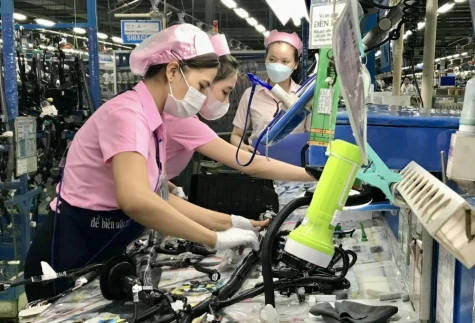



Leather shoe companies propose to be supported to quickly improve and transparently supply chain information, aiming for a circular economy, being responsible to society and the environment.

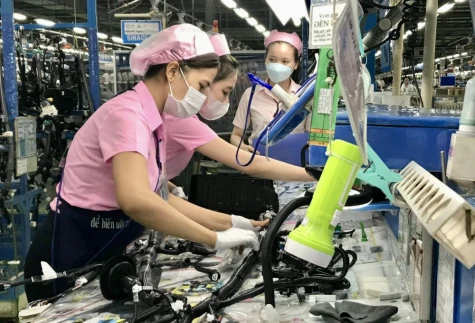
Production is conducted at TBS
The material bottleneck
According to Mr. Nguyen Quang Vu, Chairman of the Provincial Leather and Handbag Association, the footwear industry is facing many major challenges. Among them, the biggest difficulty is the bottleneck in the supply chain of raw materials. Currently, large footwear importing countries are imposing a series of new requirements, with increasing social and environmental responsibilities for products. Typical EU market has begun to impose new requirements on ecological safety, sustainability. Accordingly, manufacturers must take responsibility for the product life cycle, recycle products; assess sustainable supply chains with companies with a turnover of 450 million Euros and over 1,000 employees; traceability issues, transparent supply chains. If importing raw materials from abroad, companies will have to transparently disclose the entire production process.
Regarding this issue, Mr. Nguyen Duc Thuan, Chairman of the Board of Directors of Thai Binh Investment Corporation (TBS), Chairman of the Vietnam Leather, Footwear and Handbag Association (Lefaso), stated that the footwear industry is facing significant opportunities from signed Free Trade Agreements (FTAs), but whether it can capitalize on them depends on the development of domestic supporting industries and raw materials. Currently, TBS has established the TBS Group Handbag Office Research and Development Center and is proposing the construction of a raw materials trading center.
Vietnam is the third largest producer of footwear in the world, after China and India. The Vietnamese footwear industry has a total of 129 companies investing in raw material production, but only about 20 domestic companies have the capacity to supply high-quality raw materials. The types of raw materials produced domestically are of good quality, meeting the standards for export production.
Mrs. Phan Thi Thanh Xuan, Secretary General of Lefaso, said: "Compared to before, the localization rate of the industry has reached an average level (55%), especially for items such as sports shoes which have actively achieved 70-80%, fabric shoes nearly 100% of domestic raw materials. The lack of businesses capable of supplying raw materials poses difficulties for footwear manufacturers in meeting orders and sourcing materials. This leads to low localization rates, becoming a barrier for the footwear industry when accessing markets with high demands.”
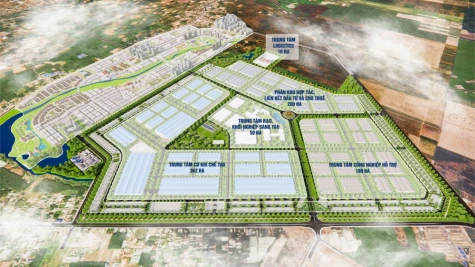
The leather shoe industry has proposed that the state support the establishment of industrial zones for the production of industrial products to support the leather shoe industry, focusing on producing leather uppers, technical fabrics, mold accessories, soles... convenient for environmental protection and centralized production organization, developing supporting industries with appropriate mechanisms and policies. Furthermore, the starting point of enterprises producing auxiliary products is low, with weak capacity, almost unable to meet excessively large orders, which is also a bottleneck in terms of the raw materials that need to be addressed.
Before the situation above, at the working session with TBS at the end of last April, Minister of Industry and Trade Nguyen Hong Dien directed the sectors to analyze the urgent needs of the leather and footwear and textile industries to enhance the proactive sourcing of raw materials for sustainable development.
Adaptation measures
Bà Phan Thị Thanh Xuân said that the footwear industry is evaluated to cause large emissions during production, while the EU is Vietnam's export market with 6 billion euros per year. Therefore, in the coming period, the Vietnamese footwear industry needs to change to adapt to these regulations.
Besides, with regard to amending and supplementing Article 35 of Decree No. 08/2015/NĐ-CP on import and export at the border, in which the General Department of Customs proposed to abolish clause 1 of item c of Article 35: "Goods traded between Vietnamese enterprises and foreign organizations, individuals not present in Vietnam and designated by foreign traders to deliver, receive goods with other enterprises in Vietnam", regarding which Lefaso has sent a letter of feedback to the General Department of Customs requesting consideration as changes may cause new difficulties for businesses.
According to Lefaso's statistics, in the first quarter of 2024, the total export of the industry reached 5.6 billion USD, up 10% compared to the same period. Regarding export markets, the 5 markets of the US, EU, China, Japan, and South Korea accounted for 80% of the total export turnover. In Binh Duong, the export turnover of leather and footwear in the first 3 months of 2024 reached nearly 420 million USD, up 11.3% compared to the same period, accounting for 5.3% of the province's total export turnover. Especially, leather and footwear is an industry that effectively utilizes FTAs.
Reported by Tieu My – Translated by Vi Bao