


Part 3: Strengthening trade exchange
One of the ASEAN Economic Community (AEC)’s major contents is intra-ASEAN trade liberalization. When the AEC officially takes effect, customers will have more selections for their shopping demand. Domestic enterprises will enjoy more opportunities when exporting their products into ASEAN countries.
Towards a unified market
According to experts, ASEAN’s main measures to build a single market and a unified production base include removing tariff and non-tariff barriers; liberalizing trade; harmonizing product standards; quickly dealing with customs procedures; strengthening the ASEAN capital market…
.jpg)
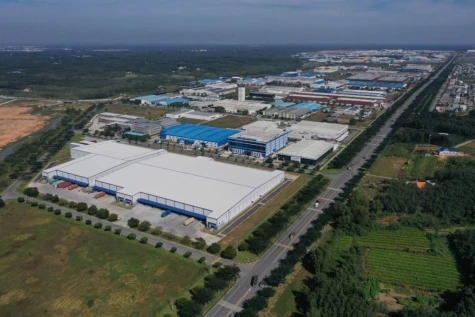
The formation of the AEC will create a motivation for domestic enterprises to boost trade exchange and investment attraction. In picture: Logistic activities at Tan Cang Song Than IDC One-Member Co.Ltd. in Binh Duong’s Thuan An town
ASEAN countries will also strengthen production network of the region by boosting coherence on infrastructure, especially in the domains of energy, transportation, information technology and telecommunications. The formation of the AEC has been concretised through critical agreements such as the ASEAN Free Trade Area (AFTA), the ASEAN Trade in Goods Agreement (ATIGA), the ASEAN Framework Agreement on Services (AFAS)...
Regarding trade liberalization, the first six member nations (Indonesia, Malaysia, the Philippines, Singapore, Thailand and Brunei) basically completed the reduction of tariff lines for commodities benefiting from tax cuts to 0-5% in 2010 and the four newer members (Cambodia, Laos, Myanmar and Vietnam) completed the task in 2015. The ASEAN one-door customs mechanism and regulations on implementing self-certification of origin are also being applied to advocate trade liberalization in the region.
Meanwhile, the bloc is carrying out the ASEAN Framework for Equitable Economic Development with a focus on supporting new member nations and facilitating small- and medium-sized enterprises’ growth.
The ASEAN countries are also accelerating the implementation of the bloc’s free trade agreements with its major partners (China, Japan, the Republic of Korea, India, Australia and New Zealand) and working hard to finalize a Regional Comprehensive Economic Partnership agreement so it can create an open economic space in East Asia with GDP accounting for one-third of global GDP and market scale occupying one-second of the world’s population.
Enhancing enterprises’ competiveness
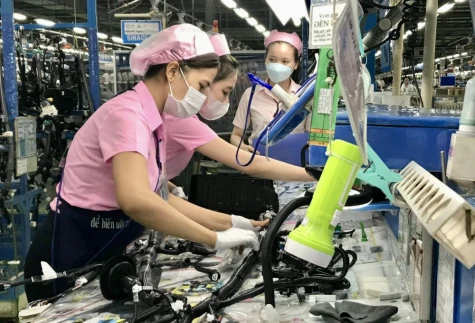
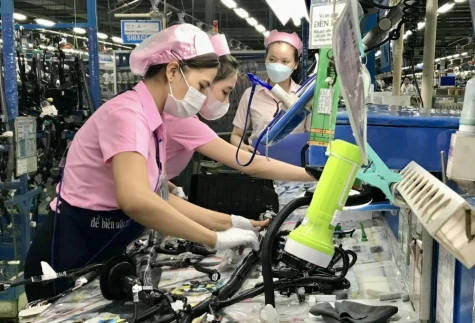
According to Nguyen The Truyen, a lawer of Thien Thang Law Office in Ha Noi, the formation of the AEC together with Vietnam’s admission to trade liberalization agreements will create a driving force for domestic enterprises to boost trade exchange, investment attraction while stepping up exports, cutting import costs and approach larger markets.
Along with advantages, the AEC also poses a raft of challenges for Vietnam. The competition from imported goods to foreign service providers and investors will be much greater for domestic enterprises. This may lead to a number of industries, if preparations are lacking, having to narrow their production scale or even withdraw from the market.
In terms of labor and employment, the ASEAN Agreement on The Movement of Natural Persons will not only create opportunities, but also challenges for Vietnam. The Government, enterprises and people need to have good preparation for combating challenges on the free movement of workers from the AEC.
Mr.Truyen added that amid Vietnam getting strong integration, countries in the region will expand their export market for goods from Vietnam and vice versa. In the situation, domestic enterprises with advantages in export will further fly while those having weak competition to the regional goods will encourage great challenges. In fact, most domestic enterprises are small-sized ones with low competitive ability. Therefore, they will encounter a raft of challenges when entering the AEC playground.
To successfully join the AEC, domestic enterprises have to review all aspects for proper development solutions. They need to seize the initiative and prepare for the opportunities and challenges that will come from the establishment of the AEC. The integral efforts by them, authorities at all levels and business associations will help improve Vietnam’s weaknesses in the current integration process.
Photo: The formation of the AEC will create a motivation for domestic enterprises to boost trade exchange and investment attraction. In picture: Logistic activities at Tan Cang Song Than IDC One-Member Co.Ltd. in Binh Duong’s Thuan An town
Reported by Phung Hieu-Translated by K.T
Strengthening trade exchange
One of the ASEAN Economic Community (AEC)’s major contents is intra-ASEAN trade liberalization. When the AEC officially takes effect, customers will have more selections for their shopping demand. Domestic enterprises will enjoy more opportunities when exporting their products into ASEAN countries.
Towards a unified market
According to experts, ASEAN’s main measures to build a single market and a unified production base include removing tariff and non-tariff barriers; liberalizing trade; harmonizing product standards; quickly dealing with customs procedures; strengthening the ASEAN capital market…
ASEAN countries will also strengthen production network of the region by boosting coherence on infrastructure, especially in the domains of energy, transportation, information technology and telecommunications. The formation of the AEC has been concretised through critical agreements such as the ASEAN Free Trade Area (AFTA), the ASEAN Trade in Goods Agreement (ATIGA), the ASEAN Framework Agreement on Services (AFAS)...
Regarding trade liberalization, the first six member nations (Indonesia, Malaysia, the Philippines, Singapore, Thailand and Brunei) basically completed the reduction of tariff lines for commodities benefiting from tax cuts to 0-5% in 2010 and the four newer members (Cambodia, Laos, Myanmar and Vietnam) completed the task in 2015. The ASEAN one-door customs mechanism and regulations on implementing self-certification of origin are also being applied to advocate trade liberalization in the region.
Meanwhile, the bloc is carrying out the ASEAN Framework for Equitable Economic Development with a focus on supporting new member nations and facilitating small- and medium-sized enterprises’ growth.
The ASEAN countries are also accelerating the implementation of the bloc’s free trade agreements with its major partners (China, Japan, the Republic of Korea, India, Australia and New Zealand) and working hard to finalize a Regional Comprehensive Economic Partnership agreement so it can create an open economic space in East Asia with GDP accounting for one-third of global GDP and market scale occupying one-second of the world’s population.
Enhancing enterprises’ competiveness
According to Nguyen The Truyen, a lawer of Thien Thang Law Office in Ha Noi, the formation of the AEC together with Vietnam’s admission to trade liberalization agreements will create a driving force for domestic enterprises to boost trade exchange, investment attraction while stepping up exports, cutting import costs and approach larger markets.
Along with advantages, the AEC also poses a raft of challenges for Vietnam. The competition from imported goods to foreign service providers and investors will be much greater for domestic enterprises. This may lead to a number of industries, if preparations are lacking, having to narrow their production scale or even withdraw from the market.
In terms of labor and employment, the ASEAN Agreement on The Movement of Natural Persons will not only create opportunities, but also challenges for Vietnam. The Government, enterprises and people need to have good preparation for combating challenges on the free movement of workers from the AEC.
Mr.Truyen added that amid Vietnam getting strong integration, countries in the region will expand their export market for goods from Vietnam and vice versa. In the situation, domestic enterprises with advantages in export will further fly while those having weak competition to the regional goods will encourage great challenges. In fact, most domestic enterprises are small-sized ones with low competitive ability. Therefore, they will encounter a raft of challenges when entering the AEC playground.
To successfully join the AEC, domestic enterprises have to review all aspects for proper development solutions. They need to seize the initiative and prepare for the opportunities and challenges that will come from the establishment of the AEC. The integral efforts by them, authorities at all levels and business associations will help improve Vietnam’s weaknesses in the current integration process.
Reported by Phung Hieu-Translated by K.T