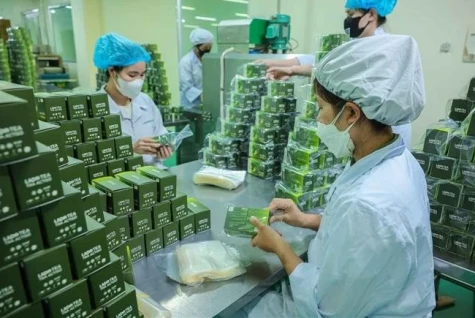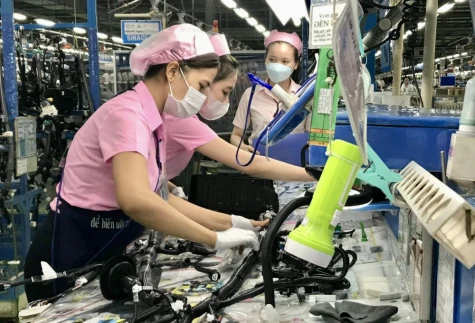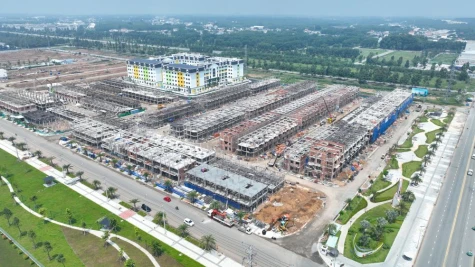



The government is committed to augmenting the country’s attractiveness as a safe and hospitable investment destination with developed infrastructure facilities and a young talented workforce.
As of May 2014, there were 16,323 foreign-invested projects operating in Vietnam with a combined registered capitalisation of US$237 billion invested by 101 countries and territories from around the globe.
Foreign invested projects have significantly contributed to the development of the country’s infrastructure by improving production capacity and technological renovation. These factors directly translate into improved business efficiencies and in turn raise the competitive edge of Vietnamese goods and services.
Foreign invested projects have also contributed significantly to stimulating economic growth by expanding the types and quality of export products as well as resulted in an ever-widening of the global export markets.
They also have been the impetus for generating innumerable high quality good paying jobs for the nation’s labour force, benefiting the social welfare and improving the quality of lives for families nationwide.
However, in the context of fierce competition in the region and the world, foreign investment in Vietnam still faces obstacles and challenges which need to be adequately resolved if economic sustainability is to be achieved.
One chief obstacle that concerns many leading market analysts is that foreign investment is overly dependent and directly linked to the ups and downs of the global economy. As the global economy declines so does foreign investment and vice versa, thereby adversely affecting sustainability, they say.
As recent specific example cited is that roughly US$11 billion out of total registered investment capital of US$15.6 billion was disbursed in 2011. Despite the global economic slowdown, FDI rose 4.8% to US$16.35 billion in 2012, but disbursed FDI declined slightly to US$10.46 billion.
When the global economy bottomed out in 2013, FDI in Vietnam hit a record high of US$22.35 billion, up 36.7%, and disbursed FDI also rose to US$11.5 billion, up 9.9%.
However, experts say that Vietnam’s FDI growth is far behind other regional countries. Most FDI projects in Vietnam are relatively small with registered capitalisation of US$100-500 million on average. The larger invested projects, those with more than US$1 billion projects, comprise just 0.2% of the total.
Foreign Investment Agency director Do Nhat Hoang points out major obstacles in attracting FDI, citing the lack of a well developed support industry as the number one hindrance holding back investment.
He also says FDI attraction could be improved by continuing to improve human resources, further developing the legal system and eliminating draconian policies that are difficult to understand or implement, and sometimes contradictory.
Yoshihisa Maruta, President of the Japanese Business Association in Vietnam (JBAV), says administration procedures and tax policy are unnecessarily complicated and complex, while the legal system remains largely inadequate and incomplete.
Deputy Minister of Planning and Investment Dang Huy Dong acknowledges the inadequacies of the legal system, stressing its completion is the key task in implementing comprehensive measures to improve the investment environment and state management capacity.
Further accelerating administration reform
Vietnam needs to accelerate administration reform, improve infrastructure, develop the support industry and high-qualified human resources, adjust technology transfer regulations, and enhance the efficiency of law enforcement to attract more FDI capital, Hoang says.
Furthermore, the country should be more selective and ensure that only high-quality projects with high added value and using environmentally friendly technologies are granted investment certificates, Hoang adds.
The country should prioritise projects and aim to award investment certificates in fields such as bio-technology for agricultural production, infrastructure development, human resource training, research and development of modern services.
Nguyen Mai, President of the FDI Business Association, says Vietnam is striving to remove obstacles to create a more solid foundation for rapid and sustainable economic growth.
The revised Investment Law and Business Law must timely address two major weaknesses, Mai says.
Firstly, removing legal barriers is a top priority to help businesses actively carry out their initiatives. Secondly, closing legal loopholes that cannot protect true business interests must be high on the agenda.
Currently, several criminal businesses make use of some loopholes to carry out illegal trading, and this must be strictly prohibited soon, Mai concludes.
Liu Mei Teh, chairwoman of the Council of Taiwanese Chambers of Commerce in Vietnam, says foreign investors not only want to have additional incentives to gain a higher profit but they are also interested in quality of life issues.
“We do hope that investors, employees and the government of Vietnam will find common ground for mutual benefit,” Liu says.
Last but not least, Roman Kuebler, Director General of B. Brauns Vietnam, says multinational groups want Vietnam’s investment environment, particularly policies, to be clear, transparent and efficient. The government needs to accelerate economic reform and improve infrastructure to attract foreign investment.
Businesses hope Vietnam will soon complete signing free trade agreements, such as the Trans-Pacific Partnership Agreement (TPP) to facilitate business activities.
(VOV)