


Trade conflicts between US and China are taking place, after US levied tax rate 25% on steel and 10% on aluminum imports into US. In return, China had the same moves. There are concerns that Vietnam steel industry could face many difficulties, because Chinese steel will flood into Vietnam. However, the fact that Vietnamese steel enterprises in general and Binh Duong enterprises in particular are under very little pressure from trade disputes between US and China.
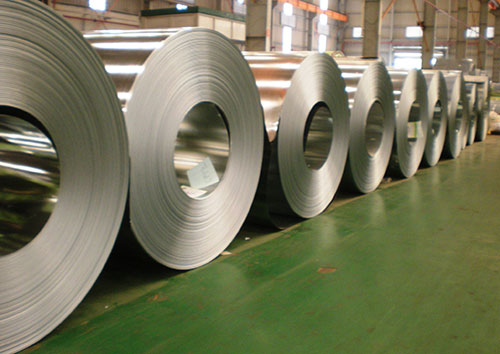
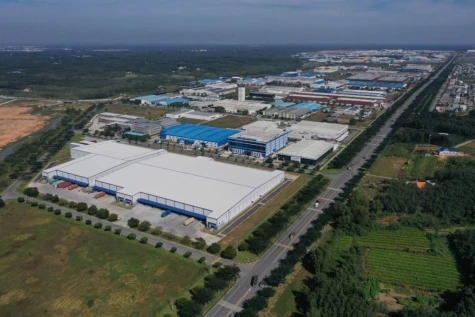
Steel enterprises in Binh Duong in recent years have developed well thanks to continuous technological innovation, production development. In photo: Steel production at Dai Thien Loc Joint Stock Company.
Vietnamese steel are optimistic
With the new decision of US President Donald Trump, Vietnam steel industry will be in the group of 12 most affected countries. However, analysts from Bao Viet Securities assessed that actual impacts would not be too serious. The reason is that the US currently only accounts for about 11% total export value of iron and steel of Vietnam.
In fact, if the export to US is affected by the new decision of President Trump, Vietnam steel industry could return to the current main market, ASEAN (accounting for 59.3 % of total export value of our steel industry). Specifically, Hoa Sen Group and Nam Kim Group (NKG) - two pioneers in taking advantage of export opportunities to the US in 2016, consume no more than 5% of total output in the US market.
In fact, China is the most worrying opponent, because it is the largest steel producer in the world, is located adjacent to Vietnam and currently has about 36% of steel imports into Vietnam. However, after China's steel exports surged due to production surplus (2014-2015), US have been repeatedly imposing import restrictions on Chinese steel. So far, the US is applying 28 tariff and non-tariff measures on many types of Chinese steel products.
Many businesses are worried that Chinese steel products would find ways to penetrate into Vietnam, bearing Vietnamese marks to enjoy preferential rates in the US. However, this possibility is unlikely, because Vietnam has also taken measures to prevent and block the massive influx of Chinese steel from previous years.
Improving competitiveness
In the current situation, according to Ho Minh Quang, Chairman of Directors Board of NKG, the most worrying to Vietnamese steel companies is the pressure from big countries of steel exports. As the road to US is shrinking, these countries will seek to exploit smaller markets, including Vietnam. However, countries such as Japan, Korea ... are major steel exporters to US. Therefore, these countries will be most affected by the import restriction of US. However, the share of exports to US only accounts for 5-12% of their exports, so this is not critical.
Meanwhile, according to Nguyen Thanh Nghia, Chairman of Directors Board of Dai Thien Loc Corporation (Thu Dau Mot city), to the US - the world's largest importer of steel, their import volume accounts for only 8% of global steel trade. Thus, the US is still forced to import steel when domestic production in the short term cannot meet the demand. In the last 10 years, US steel industry is in a stable state with average utilization rate of 73.9%. To meet the demand of more than 105 million tons per year, factories must run averagely with 95% productivity capacity. This is a performance that cannot be achieved even with US steel industry. Essentially, US will have to import steel in at least the next two years, before building new plants and meeting the demand by domestic production. Thus, steel companies in Binh Duong in particular and Vietnam in general will not suffer much negative effects.
However, US’ application of protectionist policies to steel industry may trigger retaliatory actions by other nations. If these retaliatory actions are aimed at the US, it will not affect Vietnam, but on a broader scale, the protection of production and the restriction of imports from all countries will affect Vietnam. Therefore, according to Ho Minh Quang, domestic steel companies need to renovate their technology, improve their competitiveness to stay on the domestic market and then enhance export. Thus, Vietnamese steel will reduce risks, and continue to develop strong in the future.
Reported by Khanh Vinh – Translated by Ngoc Huynh