


Import-export activities of enterprises in the province over the first 10 months of 2019 gained many good results. The province's key export items such as wood, textiles, footwear, ceramics and electronics all experienced high growth compared with the same period last year.
.jpg)
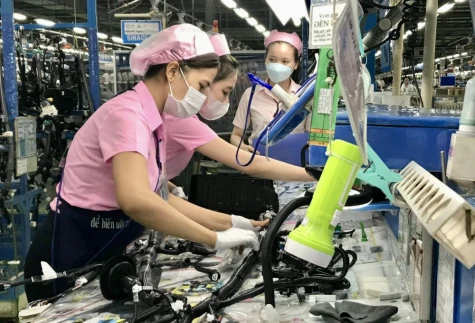
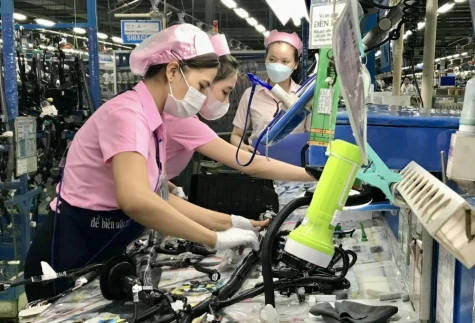
Production activities at Esquel Garment Company (Vietnam - Singapore Industrial Park 1, Thuan An Town).
Trade surplus reaches nearly $ 6.4 billion
By this time, businesses in the province have had stable export contracts for until the end of 2019, many of them have long-term export contracts; the number of export orders increased by 15% over the same period last year. As a result, over 10 months of 2019, provincial export turnover was estimated at $ 23,312 billion, up 15.7% over the same period in 2018, reaching 84% of the year target. Meanwhile, provincial import turnover was estimated at $ 16.916 billion; trade surplus was estimated at nearly $ 6.4 billion.
Processing industry played a key role, accounting for 83.9% of total export turnover of the province. Among these, 22/23 export items (except for cashew nuts) achieved a good growth rate over the same period, of which 3 items were wood processing, textile, footwear with export turnover of over $ 2 billion; 2 items reached over $ 1 billion (iron and steel, phones and components).
According to provincial Department of Industry and Trade, in the last 2 months of 2019, although the world economy still has many fluctuations, the global economic environment still has many unpredictable factors, including emerging protectionism and escalating trade war, domestic macro economy is developing stably; inflation is under control; economic cooperation, regional and inter-regional trade continues to be enhanced.
To effectively solve challenges
Trần Thành Trọng, Chairman of Binh Duong Mechanics Association, said that despite of the fierce competition in the market, it is praiseworthy that the production and business activities of its member businesses grow better than the previous year.
In the coming time, the competition will be even fiercer, thus right now businesses are making great efforts to improve product quality, invest in technology to lower prices, improve competitiveness for products. Domestic businesses are looking forward to connecting with foreign businesses investing in Vietnam to take part in the supply chain, promoting their own advantages ...
According to Binh Duong Textile Association, its member businesses obtained stable export orders for until the end of this year, the number of orders increased 5% over the same period last year. Apart from the advantages from free trade agreements, the textile and apparel industry still has potential risks, such as exchange rate fluctuations between currencies that lead to short-term export orders with limited quantities to prevent losses due to exchange rates; the risk of being sued against tax evasion, Chinese goods using fake “Made-in-Vietnam” labels...
According to Huỳnh Quang Thanh, Director of Hiep Long Company, Binh Duong's wood products have increasingly affirmed the prestige and good quality on international markets. Meanwhile, due to good effects of free trade agreements, the export of wood products has continuously grown sharply in recent years. However, the timber industry is also facing many challenges, notably trade fraud - which is happening strongly. In addition, businesses need to renovate technology, improve corporate governance to receive high-value orders. Timber industry in Binh Duong also needs a long-term strategy, as market opportunities are wide open.
Nguyễn Thị Bích Vân, President of Unilever Vietnam, said that purchasing power of Vietnamese consumers was increasing. It is important for businesses to have good products to compete with imported goods. According to Ms. Van, the challenge facing Vietnam now is improving worker’s skills, lowering production cost of enterprises. On the business side, it is necessary to rearrange activities to control costs in the best way; It is important to identify future competitive advantages to focus on reforms. Functional agencies and local governments need to step up vocational training, strengthen human resources, promote linkages between vocational training institutions and enterprises...
Currently, functional agencies and businesses in the province are strengthening cooperation to train workers for higher qualifications to meet production requirements of businesses in the new situation. The province is also upgrading infrastructures, especially logistics infrastructure to reduce investment and transport costs, creating the most favorable conditions for businesses.
Nguyễn Thanh Hà, Deputy Director of Department of Industry and Trade, said that in the coming time, the industry would regularly follow up grassroots units, closely monitor production and business of enterprises, associations to recommend solutions to Provincial People's Committee, Ministry of Industry and Trade to promptly remove difficulties of enterprises, create favorable conditions for enterprises to stabilize production and business, contributing to curbing inflation and stabilizing the provincial economy.
Reported by My Phan – Translated by Ngoc Huynh