


Free trade agreements (FTAs), especially the ASEAN Economic Community (AEC) and the Trans-Pacific Strategic Economic Partnership Agreement (TPP) that Vietnam has joined, have brought both opportunities and challenges to the domestic economy. Noticeably, small and medium-sized enterprises (SMEs) will face the most pressures.
Change for existence and development
Currently, Vietnam is members of the World Trade Organization (WTO) and many bilateral, multilateral trade agreements. The integration of the domestic economy is taking place very deeply and widely. The most concerned issue at present is that 90% of Vietnamese enterprises are small and medium-sized ones and over 70% of them are super-small ones with poorness in terms of capital, technology, workforce...
.jpg)
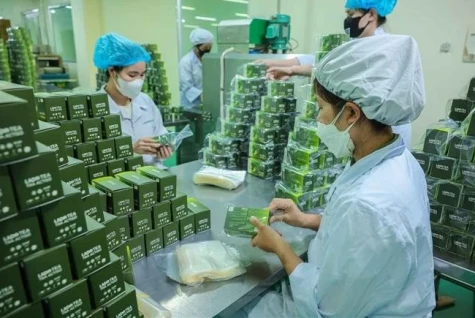
Production activities of Viet Ha Cashew Import-Export Joint Stock Company (Vietcashew) in Thuan An town
According to experts, free-market economy will pave the way for equal competitiveness regarding commodities, services, human resources, intellectual property…This requires domestic enterprises, especially SMEs to make changes for existence and development in such a severe competitive environment.
Economic expert Le Tham Duong said that Vietnamese economy is predicted to enjoy opportunities for growth, generating jobs for laborers…, but it does not ensure existence for all enterprises before the current integration wave. Apart from complying with regulations on intellectual property, industrial design, transparent public investment…, environmental elements are also big challenges for enterprises that have long been acquainted with business ways irresponsible for the environment.
Coherence promoted
According to statistics, the whole country is home to more than 500 SMEs, accounting for 97.5% of total. But, their financial capacity is still very weak. Under the Government’s orientation up to 2030 and vision toward 2050, the number of domestic enterprises will increase by ten times compared to the current period. This will help boost the strength of internal force for domestic economy that is depending much on foreign enterprises. For that reason, the “business start-up” phrase is widespread on the mass media. Vietnam will mobilize all resources for “business start-up” before the new situation.
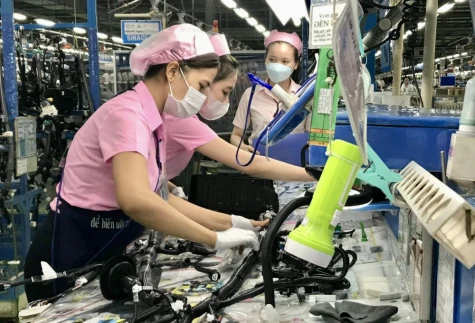
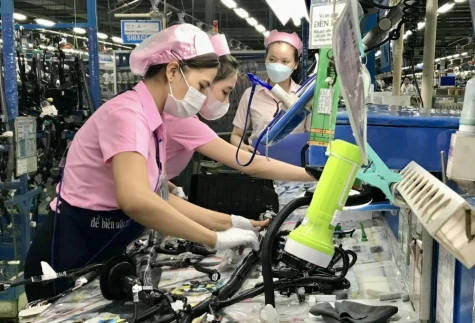
Binh Duong’s garment and leather footwear are key export products, greatly contributing to the country’s export value. But, province-based enterprises have not fully tapped their potential in terms of intelligence to enhance the added value of products yet.
However, Binh Duong’s associations of industries have been proactive in welcoming opportunities and challenges from FTAs. Luu Phuoc Loc, Vice-Chairman of Binh Duong Furniture Association (BIFA) said that members of BIFA have made careful preparation for FTAs in order to wait in front for the global economic trend. Apart from processing and exporting wooden products, members of BIFA have got involved in providing production materials, logistics services…, creating a close coherence for the local furniture sector to further fly.
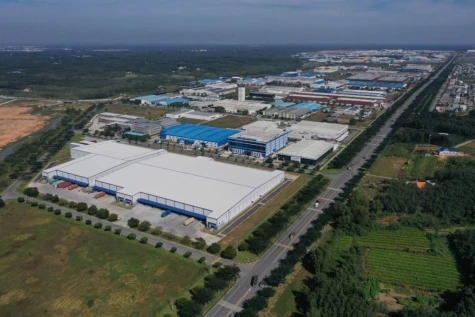
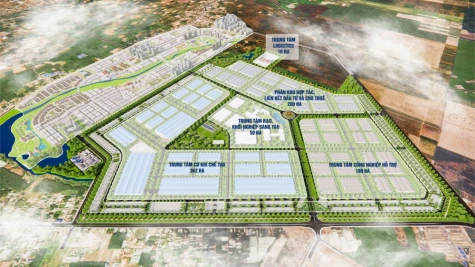
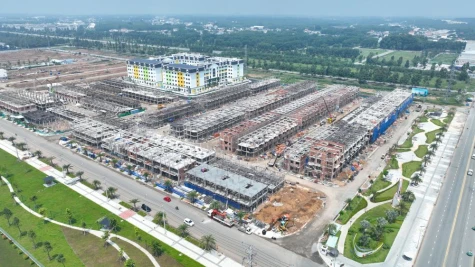
For successful integration, Binh Duong has called for enterprises to make investment in hi-tech industries in recent years. The province now has some industrial parks specialized in these industries and they are luring a lot of investors. Economic integration is an indispensable process, so SMEs need to strengthen their financial capacity to be able to adapt themselves to the global economy towards sustainable development.
Reported by Phung Hieu-Translated by K.T