


Binh Duong has been boldly investing in infrastructure construction in a comprehensive manner, diversifying resources and modes of investment, development of transport infrastructure, especially important outward projects. Meanwhile, the province also builds internal transport axes to connect different areas in the province, contributing to creating a driving force for development.
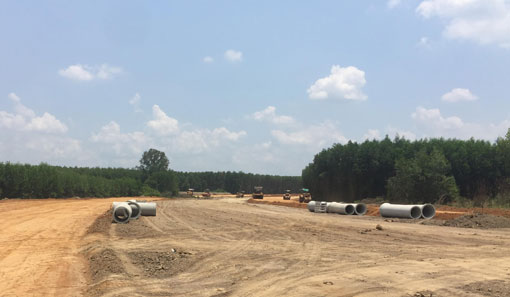
The process of Thu Bien - Dat Cuoc Road is being speeded up to complete Belt Road 4, contributing to the socio-economic growth of the province and the southern key economic region.
Economic and urban development
Binh Duong Province (including the central urban areas of Thu Dau Mot, Di An, Thuan An, Ben Cat and Tan Uyen) is an adjacent urban area of Ho Chi Minh City according to the adjusted Planning for Ho Chi Minh City Region Minh until 2030 and vision towards 2050. This was approved by the Prime Minister in 2017. Therefore, the role of Binh Duong in connecting Ho Chi Minh City and the Southern key economic region is very important.
Currently, the development investment in southern towns of the province has concerned provincial leaders about step by step to have investment plans that commensurate with the classified urban areas and improve connectivity. In particular, in recent years, the province has made efforts in upgrading the technical infrastructure, in which attaches importance to connecting roads, waterway and railway to urban areas of Dong Nai province and Ho Chi Minh City.
My Phuoc - Tan Van road is a strategic traffic life-line of Binh Duong province. This road connecting the southern and northern industrial areas of the province, is a part of Belt Road 3 project of Southern key economic region. The completed road has helped to reduce traffic congestion on National Highway 13 and DT743, while connecting provincial technical infrastructure system with Thi Vai, Cai Mep and container ports; Long Thanh international airport. The construction of My Phuoc - Tan Van road has an important contribution to the socio-economic growth of Binh Duong. In addition, the upgraded and expansion of roads, such as 7A (from Do bridge to Rach Bap junction), DT741, DT742, DT743, DT744, DT746, Ong Co bridge, Pham Ngoc Thach street... are completed to ensure uninterrupted and synchronous connection.
To increase regional connectivity
In order to enhance regional connectivity and stimulate socio-economic development, Binh Duong is focusing on construction of many roads. Namely, the province is currently upgrading and expanding Highway 13 to solve traffic congestion and ensure regional traffic connections. Regarding Ho Chi Minh route (Chon Thanh - Duc Hoa section), the province recommended Ministry of Transport to soon execute this project to strengthen the connection between Binh Duong, Binh Phuoc and Tay Ninh. Similarly, for Ho Chi Minh City Belt Road 3, the province is building a section from Tan Van intersection to Binh Chuan with 6 lanes.
In addition, Binh Duong is upgrading each section of Belt Road 4 to connect Binh Duong with Ho Chi Minh City and Dong Nai. Huynh Pham Tuan Anh, Deputy Director of provincial Department of Construction, said Binh Duong recommended Ministry of Transport to accelerate the process of road clearance and the construction according to the Prime Minister's approval.
In addition, Binh Duong is speeding up the construction of Bach Dang 2 Bridge across Dong Nai River. This is one of the key projects that will be started in 2020 to celebrate the 11th Provincial Party Congress. The completed project will complete the inter-regional road network, creating favorable conditions for commute and boosting the local economy.
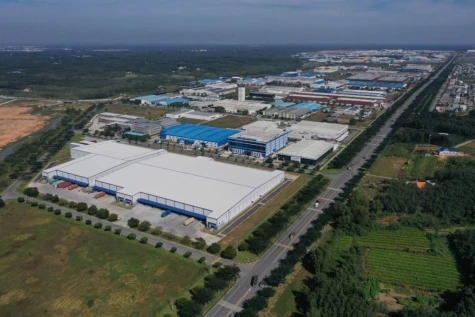
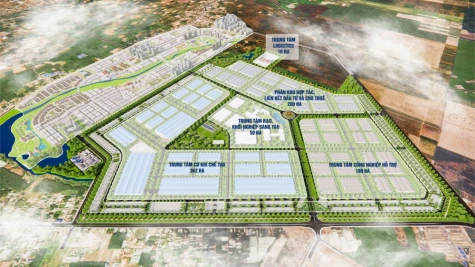
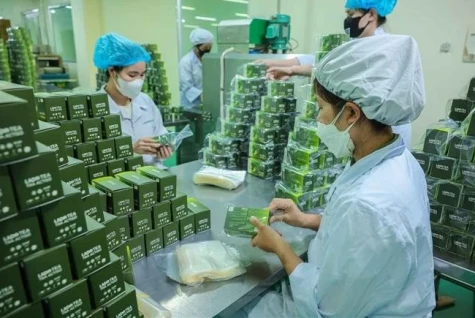
Apart from investing in road infrastructure, Binh Duong also pays great attention to the development of railway system. Regarding Di An - Loc Ninh and Ho Chi Minh City - My Tho - Can Tho - Ca Mau routes, according to Mr. Anh, the province counselled Ministry of Transport to soon start setting up landmarks and site clearance boundaries for the province to announce and manage construction planning according to regulations. Currently, the whole province has been developing 29 industrial parks with an area of 12,743 ha and 12 industrial clusters with a total area of 794 ha, of which 26 are in operation. To meet the commute demand, especially the demand for freight, Binh Duong asked the railway industry to pay attention to inter-regional railway lines.
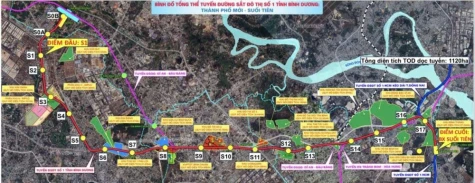
Currently, Ben Thanh - Suoi Tien metro line 1 is under construction and will be extended to Binh Duong, creating favorable conditions for the connection of urban areas between Ho Chi Minh City, Dong Nai and Binh Duong. The project will address the public transport demand of passengers between the three localities in the long run. In addition, the project also creates favorable conditions for the strategy of urban construction and development in the southern key economic region, contributing to reducing population pressure and traffic congestion for Ho Chi Minh City.
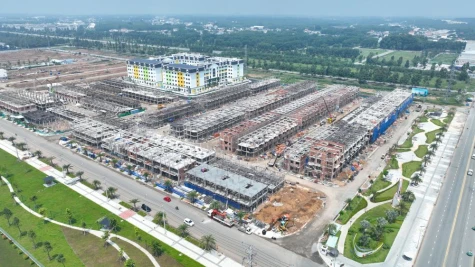
It can be seen that once the transport infrastructure is modernly and synchronously, it will be the foundation to attract investment, develop industrial production in particular and the province's socio-economy in general, at the same time change the urban face of Binh Duong.
Reported by Phuong Le - Translated by Ngoc Huynh