


Under planning of Ministry of Agriculture and Rural Development, by 2020 exportation revenue of wood would meet USD 8 billion. Within 2014, the value of exporting wood and wooden products of Vietnam gained USD 6.23 billion, prompting experts to give out such estimation for USD 8 billion in accordance with the planning. The gain in 2014 was thanks to great contributions of woodwork enterprises in Binh Duong Province for their share of 40%.
However, wood processing and exporting nationwide are facing tremendous challenges ahead.
Challenges
According to Binh Duong Furniture Association (BIFA), enterprises of woodwork have mushroomed in 10 years. In 2002, only 30 enterprises were in the field; by now, it became hundreds. The distribution is 70% of domestic enterprises, 5% of State-owned, and 25% of FDI.

Workers are working on wood processing line in Binh Duong Province. Photo: D. Chi.
Currently, the heat is weaving and challenges is emerging from the participation into AFTA and FTAs which eventually reduce taxes on furniture and processed wood in ASEAN.
Mr. Huynh Quang Thanh, President of Binh Duong Furniture Association informed of over 500 enterprises in charge of processing and exporting wood, putting the woodwork industry to the verge of material scarcity and auxiliary services and products. In previous years, enterprises in Binh Duong Province depended on raw materials from Cambodia and Laos. As the two countries have tightened up forest protection policies, they have to divert to importation from USA and Canada for pine, acacia, and oak with higher production fees and more time for purchase orders to accomplish.
Besides, the auxiliary products for wood industry in Binh Duong Province such as paint, oil, mould-proof chemicals, screws, etc. have not been widely developed to satisfy actual needs, prompting them to import for foreign countries. As such auxiliary materials may occupy 20 to 25 percent of production cost, enterprises are directly affected.
The best advantages for enterprises
For the time to come, BIFA welcomes more members as new investors into wood industry in Binh Duong Province and supply of materials and auxiliary materials. In the best scenario that domestic enterprises will create strong competition by the optimal cooperation to reduce production costs.
To be able to compete, local enterprises should be in permanent links of information, technology, supply, and human resources to ensure individual development of the enterprises. They should join up in large purchase orders of high costs to earn benefits or else foreign enterprises would overtake.
Mr. Luong Ngoc Kim, Deputy President of BIFA, evaluated that FDI enterprises in Binh Duong Province have much larger supplying system with marketing strategies for global distribution into supermarkets and commercial centers. Thus, the strategic steps should not be omitted if domestic enterprises want to join up the exportation market.
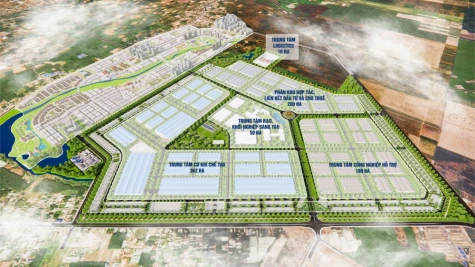
To offer the best advantages to woodwork enterprises in Vietnam, Ministry of Industry and Trade has encouraged provinces to establish transaction floors to help enterprises with available materials as well as cost reduction in the global trend where wood processing industry is facing the fiercest competition. In the face of it, Mr. Tran Van Nam, Chair of Binh Duong Provincial People’s Committee, just approved the establishment of woodwork industrial zone within Tan Lap Industrial Cluster in North Tan Uyen District in a move to support woodwork enterprises in Binh Duong Province in the wave of strong investment into wood industry locally. On the other hand, policies of taxes and customs have been simplified to facilitate the best advantages of local woodwork enterprises in the tendency of fierce competition.
Reported by Phuong Le – Translated by Vi Bao